 Request a Strategy Session.
  Our Location

Nov15
Trademarks/Service Marks
Trademarks/Service Marks
What is a trademark?
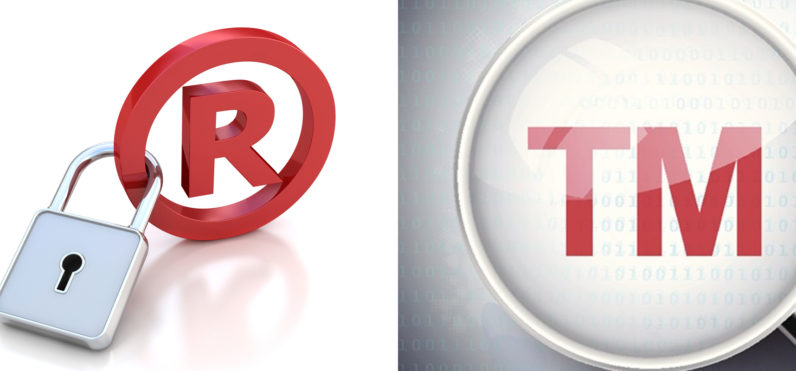
A trademark is a word, phrase, symbol, design, or logo that identifies the source of the goods and distinguishes these goods from the goods of other parties. Generally, the symbol “TM” or “R in a circle” is placed besides the trademark. For example, recently I filed a trademark for a local clothing designer in California whose symbol identifies his business as the source of his goods (clothing).
What is a service mark?
A service mark is similar to a trademark, however, it’s distinguishable because it identifies the source of a service instead of a source of goods. In common vernacular, most people refer to a service mark as a trademark. This mix-up is potentially problematic for applicants who register a trademark when in fact, they need a service mark. By way of example, I filed a service mark for a local dj in San Diego who provides disc jockey services–his service mark identifies him as the source of his services. In addition, I also applied for a trademark with respect to his ancillary goods; specifically, the production and distribution of his music and records. Here, registering a trademark alone would have been insufficient for a service provider.
What is necessary to qualify my name as a trademark/service mark?
The threshold issue is whether the name you select can even be considered a trademark or service mark. Just to provide some context; trademarks and service marks are judged on a spectrum of distinctiveness; that is, the mark must be inherently distinct or have acquired distinctiveness over time (a.k.a. secondary meaning) to be considered a trademark or service mark in the first place. If the mark is generic or simply descriptive it will not be considered a trademark or service mark; in fact, it will likely be denied registration at the state and federal level. On the other hand, if the mark is suggestive, arbitrary, or fanciful, the mark will likely avoid rejection for lack of distinctiveness.
Do I really need to obtain a trademark?
If you believe your brand has or will attain any value in the foreseeable future, the simple answer is yes. Having the exclusive rights to a mark is extremely valuable–it’s not only about excluding others from using your brand, it’s also about making sure you don’t get stripped of your current use. Indeed, for some people the consequence of failing to realize the value of obtaining trademark protection can be devastating. For example, imagine branding yourself for a few years and then trying to obtain a trademark only to realize that someone else has already claimed that mark; effectively, you would have to stop using your brand and come up with something else or face legal consequences.
As you can imagine, this can become very expensive. In fact, this unfortunate situation befell a client of mine who spent about $10,000 in building his brand, logo, and website only later to realize that another owner had registered the mark for the same class of services and was actively engaged in business.
Of course, as with any business owner making an investment in an intangible asset, many tend to focus on the protections afforded by having a trademark, failing to appreciate that trademarking a brand is also very beneficial from a marketing standpoint.
First, let’s briefly discuss the marketing benefits. A trademark provides a business with legitimate and credible branding–it gives the world notice that you value your brand, image and reputation, and that you’re here to stay. The trademark is an investment you make, and like all investments, it can surge and gain value. Additionally, as a practical matter, a trademark often gives business owners a sense of pride in ownership of brand/name, in turn, this encourages the owner to ensure that they maintain the brand, quality, and image of their investment.
With respect to protecting your brand, a trademark allows you to capture and secure the investment you’ve made in creating goodwill and repute. Effectively, trademark protection prevents the misappropriation of your brand. The more popular your brand becomes; the more likely others will want a piece of the pie. After all, it’s a lot easier to use someone else’s established and recognized brand to pass off your own goods; what should come to mind are knock offs. Think about a company that produces an inferior pair of jeans but misappropriates the Levis brand as its own. As a practical matter, not only will the infringer reap benefits off your brand, but they may also dilute and tarnish your image by providing substandard products or services.
By having a registered mark, you can prevent and deter both intentional and innocent infringers from using your brand because they have notice of your claim in the mark. In fact, not only will your mark itself put them on notice, but when conducting a due diligence search at the United States Patent and Trademark Office other businesses will discover your mark and registration claim. As a practical matter, it’s an excellent way to prevent and deter others from using your brand.
Moreover, in the wake of the Uniform Domain Name Dispute Resolution Policy created by ICANN and used by all accredited registrars, a trademark owner can initiate a relatively inexpensive administrative procedure to challenge an existing domain name being used by another party. On the other hand, a trademark owner can use their trademark to oppose a domain name dispute and prove a legitimate right or interest in the domain name. Consequently, trademark registration can carry the day in the event of a domain name dispute.
Additionally, strong steps can be taken to both notify infringers and immobilize their method of infringement. Sending a simple letter to the infringer to cease and desist using the mark, if disregarded, can subsequently lead to a civil action for damages and injunctive relief. Notably, an important, but sometimes overlooked, tool with which trademark owners can address the importation of infringing or counterfeit goods into the United States is the recordation of their registered U.S. trademarks with the U.S. Customs and Border Protection (simply file online at https://iprr.cbp.gov/).
What’s the difference between the symbols “TM”, “SM” and the “R in a circle”
The “TM” and “SM” can be used in combination with your mark to identify to others that you are claiming common law rights in the mark. It can also be used if you file your mark at the state level. The “R in a circle” is used when you register your trademark on the federal register, putting others on notice of your exclusive rights in the mark that span across the entire United States.
Federal Registration or State Registration?
Contrary to popular misconception, registration of a mark at the federal or state level is not required to have exclusive rights. In the United States, you can establish common law rights in a mark based solely on use of the mark in commerce, without registration. Of course with common law rights, exclusive use of the mark is limited to the geographic region where the mark is used. Nevertheless, having the mark registered at the federal or state level provides a number of significant advantages over common law rights alone.
Federal Registration (USPTO)
What is required:
- Filing a Federal Application with the USPTO ($225-$325).
- Use of the mark in Interstate Commerce (use across state lines).
- Federal trademark registration requires that the trademark be distinctive. The law defines distinctive to mean it must be capable of identifying the source of a particular good or service. Marks that are arbitrary or fanciful, suggestive, or have acquired distinctiveness (secondary meaning) are deemed to be distinctive and worthy of trademark protection. On the other hand, merely descriptive marks or generic marks are not distinctive and can not be registered
- Federal trademark registration further requires that there be no likelihood of confusion with another similar mark.
Advantages over State and Common Law Rights:
- A legal presumption of your ownership of the mark and your exclusive right to use the mark nationwide on or in connection with the goods/services listed in the registration (whereas a state registration only provides rights within the borders of that one state, and common law rights exist only for the specific area where the mark is used).
- Public notice of your claim of ownership of the mark (i.e., publication).
- Listing in the USPTO’s online databases.
- The ability to record the U.S. registration with the U.S. Customs and Border Protection Service to prevent importation of infringing foreign goods.
- The right to use the federal registration symbol “R in a circle.”
- The ability to bring an action concerning the mark in federal court.
- The use of the U.S. registration as a basis to obtain registration in foreign countries.
- If your mark is used across state, territorial, or international boundaries, you will probably end up in federal court. Federal law permits an award of attorneys’ fees to a victorious plaintiff, but only when the trademark infringement is intentional.
- The option to file an intent to use application with actual use occurring 6-months after notice of allowance (whereas state registration requires actual use at time of filing).
State Registration (California)
What is required:
- Filing a Trademark Application with the California Secretary of State ($70).
- Use in Commerce within California
- State trademark registration requires that the trademark be distinctive. The law defines distinctive to mean it must be capable of identifying the source of a particular good or service. Marks that are arbitrary or fanciful, suggestive, or have acquired distinctiveness (secondary meaning) are deemed to be distinctive and worthy of trademark protection. On the other hand, merely descriptive marks or generic marks are not distinctive and can not be registered.
- State trademark registration further requires that their be no likelihood of confusion with another similar mark.
Advantages over Common Law Rights:
- A legal presumption of your ownership of the mark and your exclusive right to use the mark in all of California on or in connection with the goods/services listed in the registration (whereas common law rights exist only for the specific area where the mark is used, i.e., city/county).
- Public notice of your claim of ownership of the mark (i.e., publication).
- Listing on the CA Secretary of State database (must call in to check).
What is the difference between a “trade name” and “trademark”?
When you choose a name for your business, this is known as a trade name. If you choose a name to identify your product or services, this is known as a trademark. In practice, there is substantial overlap between the two titles, hence why many businesses begin using their trade name to identify their goods and services. By way of example think about the Coca Cola Company; they began using their business name both as a trade name and trademark. In summary, a “trade name” relates to the business and its goodwill, as contrasted with a “trademark” which attaches to a commodity or service as a guarantee of quality. Balesteri v. Holler, 87 Cal. App. 3d 717, 721, 151 Cal. Rptr. 229, 232, (1978).
If I simply apply for a fictitious business name (FBN) or file an entity name and don’t care about trademarking, am I good to go?
Well contrary to popular belief, trademark due diligence is necessary even if you do not intend on obtaining a trademark for your business name/brand. Many business owners file a fictitious business name (FBN) statement, corporate entity, or LLC identity (all collectively referred to as “trade name”) with their county or state under the false belief that once the county or state grants their application they are free to use the trade name. This is false, and can lead to devastating consequences for business owners.
It is true that the county or state clerk will do a search to determine whether another business in the same county/state is doing business under the same exact trade name; however, the clerk will not search for other trademarks or business names outside the county/state. In fact, the states purpose in compelling FBN or entity name registration is simply to provide a practical system for consumers to identify the proper agent for service of process. Nevertheless, many people derive a false sense of security–thinking they have the unconditional right to use the trade name just because they registered it with the county/state. The reality being; a third party may already have the trade name registered as a trademark. Even more difficult to identify is the possibility of a neighboring business in the same county using a similar name, either as the FBN or entity name, which may provide them with priority common law rights that they can enforce against you; this is especially true if there is any likelihood of confusion between the names. For example, opening up a dealership named Star Motors when another established dealership has been using the name Star Automotive in the same geographic region may be problematic. This is because under the common law, the first party to use a name in commerce has the exclusive right to use the name.
So you may wonder, what consequences do I face? Well the first is an informal request by a third party requesting you cease and desist use of the trade name. The second would entail the third party filing a trademark or trade name infringement action against you. Here are your options: 1) You can stop using the name; of course, if you do stop using the name, this can result in extensive financial loss since you’ve likely invested money and time establishing the name and will be forced to choose a new name and start the identity/goodwill process anew; or 2) you can spend money on attorney fees trying to establish that you are not infringing. Regardless, you do not want to be the focus of litigation, and if you plan on being a successful and lasting brand/name, you want to make sure you start off investing in a name/brand that will not be susceptible to challenge.