 Request a Strategy Session.
  Our Location

So, what is a Patent?
By way of background, Article 1, Section 8, Clause 8 of the United States Constitution provides:
“congress shall have the power to promote the Progress of Science and useful Arts, by securing for limited Times to Authors and Inventors the exclusive Right to their respective Writings and Discoveries”
It’s through this express grant of authority, that congress codified the patent law in Title 35 of the United States Code.
To understand what a patent is you first have to understand what it is not. Contrary to popular misconception, a patent does not give one a monopoly in the sense of having the absolute right to practice the protected invention. Rather, a patent gives one an exclusive right; that is, the right to exclude others from making, using, or selling your invention. This can be better illustrated by way of example; let’s say the USPTO grants you a patent because you invent a product that meets all of the statutory requirements. Let’s assume your product comprises of elements A + B + C + D, and let’s further assume another patent exists on an invention that comprises of elements A + B + C. Although you met all the statutory requirements needed to obtain a patent, the patent law does not give you the absolute right to practice your invention. In the example given, you would be entitled to exclude everyone from practicing your invention comprising of elements A + B + C + D, but you would not be allowed to practice your invention without obtaining permission from the owner of the A + B + C patent because by way of practicing your invention you will be infringing his patent. On the other hand, the owner of the A + B + C patent can not make, use, or sell a product comprising of elements A + B + C + D because he would be infringing your patent (i.e., remember a patent grants you the right to exclude others). One way to overcome this obstacle is to wait until the A + B + C patent expires and another way would be to cross-license each others patents.
To continue, the exclusive right is not unlimited, in fact, it is generally limited to twenty years from filing. For many, this begs the question; why not just keep my idea a trade secret and capitalize on it indefinitely? Of course, what this question fails to recognize is that one can not keep an invention secret if it can be reverse-engineered. For those who can keep it a trade secret, great, maybe you’ll be the next Coca Cola formula. For everyone else, this is why the patent law is such a useful tool; it prevents the misappropriation of innovative ideas that can be reverse engineered.
To understand the purpose behind the patent law, one must first recognize the fundamental principal of contract law; specifically, reciprocal consideration (an advantage granted in return for something). Under the patent law, in return for full disclosure of your invention, the government provides you the exclusive right to your invention for a limited term. Effectively, the government provides an advantage in return for something. It is through this exchange that the patent law can encourage innovation and the free flow of information and ideas.
What types of patents are there?
There are three types of patents; utility, design, and plant. Here, I will only discuss utility and design patents.
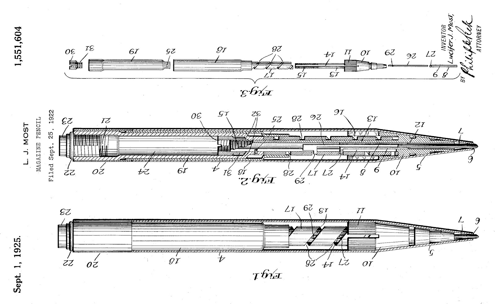
Utility Patent (Protects Function): A utility patent can only be granted to a useful invention. That is, an invention that provides some identifiable benefit and is capable of use. Moreover, a utility patent protects the functional aspects of an invention and is capable of protecting many different variations of an invention. Generally, a utility patent will protect your invention better than a design patent because it provides broader protection.
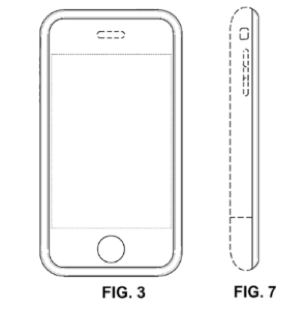
Design Patent (Protects Aesthetics): The design of an article of manufacture may be patented based on its ornamental appearance. Generally, design patents are governed by the same rules as utility patents. However, for a design patent, the law replaces the “usefulness” requirement of utility patents with an “ornamental” requirement. Additionally, a design that is primarily functional or mechanical will not qualify for a design patent. On the other hand, a design that incorporates functional features can still be patentable if it has ornamental features than can exists independently of its functional features. In re Shilling, 421 F.2d 816, 23 U.S.P.Q. 576. If you need an example, think of the iPhone design. Keep in mind that although a design patent is cheaper and faster to obtain, it can be relatively easy to design around by simple changes to the overall ornamental appearance.
Can I obtain a utility patent and a design patent on my invention?
Yes. Under certain circumstances, it may be optimal to protect both the function of your invention and its unique appearance. By way of example think about a pair of headphones that are capable of interrupting the melody to read aloud a text message you receive (a utility patent could protect this function). Now think about each earbud of the headphones designed to resemble the shell casing of a bullet (a design patent could protect this ornamental design). In some instances, there may be nothing unique about the invention; therefore, it may be best for an inventor to neither pursue a utility or design patent and just take the product to market as is.
What is the term of a patent?
The term for both a utility and plant patent is 20 years from filing. The term for a design patent is 14 years from issuance, but for applications filed on or after May 13, 2015, the term has been extended to 15 years from issuance.
What is required to obtain a patent?
Three statutory requirements are considered the significant hurdles to patentability in the United States. These statutory requirements consist of the following.
35 U.S.C. § 101
“whoever invents or discovers any new and useful process, machine, manufacture, or composition of matter, or any new and useful improvement thereof, may obtain a patent…”
Essentially this section imposes a requirement to show:
- Utility
- Inventorship
- Subject Matter
35 U.S.C. § 102
Imposes a novelty requirement.
35 U.S.C. § 103
Imposes a nonobvious requirement.
35 U.S.C. § 112
- (a) IN GENERAL.—The specification shall contain a written description of the invention, and of the manner and process of making and using it, in such full, clear, concise, and exact terms as to enable any person skilled in the art to which it pertains, or with which it is most nearly connected, to make and use the same, and shall set forth the best mode contemplated by the inventor or joint inventor of carrying out the invention.
(b) CONCLUSION.—The specification shall conclude with one or more claims particularly pointing out and distinctly claiming the subject matter which the inventor or a joint inventor regards as the invention.
Essentially this section imposes a specification requirement that should include:
- Written Description
- Enablement
- Definiteness
- Best Mode
- Claims
When should I file my patent?
If you think your invention is valuable you should file a nonprovisional patent application as soon as possible. If you are not sure how valuable the invention is, and you still need to test the market and raise capital, you should at minimum file a provisional patent application. I discuss the differences between a nonprovisional and provisional application below. Keep in mind, that in the wake of the American Invents Act, as of March 2013 the United States changed from a First-to-Invent system to a First-Inventor-to-File system. What this means is that if another inventor independently creates the same invention, even though you were the first to invent, they will be entitled to a patent so long as they beat you to the patent office. Of course, this isn’t to say that they can steal your invention, they still have to independently conceive the idea. In light of these consideration, it is imperative that you file an application as soon as possible.
What is the difference between a Provisional and Nonprovisional Application?
A provisional application allows an inventor to reserve a priority date by disclosing their invention in an application to the USPTO.
Provisional applications are not examined by the USPTO, in other words, the provisional application simply holds your place in line. On the other hand, a nonprovisional application would actually initiate the examination process.
As a practical matter, a provisional application requires less time to file. Gene Quinn of IP Watch Dog says it best “[w]ith most provisional patent applications the 75-25 rule applies. To get to 75% complete it takes 25% of the time and the final 25% will take 75% of the time”.
The benefit of a provisional application is the ability for an applicant to delay significant costs while raising funds and testing the commercial viability of the product. Once a provisional application is filed, a nondisclosure agreement is no longer necessary; in effect, you can market your invention without fear of losing patent rights.
Further, a provisional application includes a specification and drawings. No claims are required. It should be noted that an applicant may only file a provisional application for a utility patent–a provisional application is not permitted for a design patent.
Within one year after the provisional filing, a nonprovisional application must be filed otherwise the application goes abandoned. A nonprovisional application requires the filing of a specification, drawings, claims, and inventor oath. Generally speaking, only once a nonprovisional application is filed has the applicant truly initiated the first step of the lengthy examination process.
Non-Disclosure Agreements
As an initial matter, in cases where an inventor is seeking the advice and counsel of a patent attorney, it is unnecessary to obtain a confidentiality agreement (a.k.a. non-disclosure agreement) prior to disclosing the invention. This is because the professional rules of responsibility that apply to patent attorneys require that any confidential information be maintained in the strictest confidence.
On the other hand, it is highly recommended to have a non-disclosure agreement (“NDA”) in place when you discuss your invention with manufacturers, investors, or any other parties. Not only will an NDA prevent others from misappropriating your idea, it will also prevent triggering the one-year clock from running with respect to prior art. That is, according to the patent law, any confidential disclosure is not considered prior art. This is significant because public disclosure of your invention is considered prior art, and according to 35 U.S.C. § 102, you have one year after publishing prior art to validly file your patent application.
Small Entity vs. Micro Entity Fee Reductions
If you qualify for Small Entity you receive 50% off most PTO fees.
Small Entity criteria:
- Less than 500 employees.
If you qualify for Micro Entity you receive 75% off most PTO fee.
Micro-Entity criteria:
- No duty to assign patent application to non micro-entity
- Each inventor has no more than four patented inventions
- Each inventor has a gross income of no more than $160,000.
You can find the USPTO filing fee schedule by visiting: https://www.uspto.gov/learning-and-resources/fees-and-payment/uspto-fee-schedule
Copyright © 2016 The Jami Law Firm